Asia
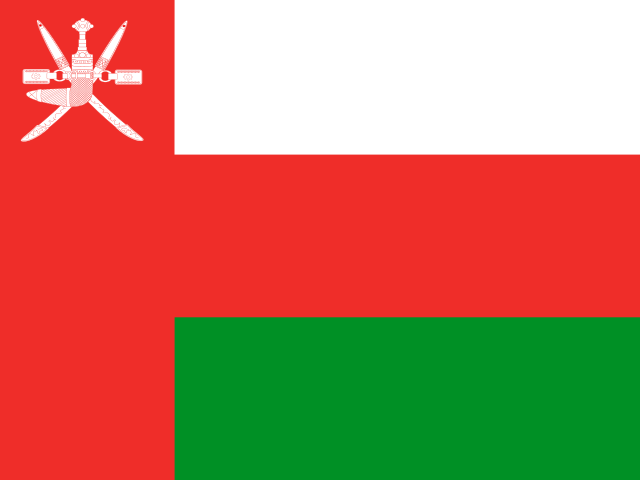
Oman
Oman is quietly recalibrating.
Explore Oman on Map.ca ↗How to say hello
- مرحبا ar
The Pulse
Oman is quietly recalibrating. Sultan Haitham, in power since 2020, is pushing economic diversification hard—tourism, logistics, manufacturing—because oil revenue won't carry the budget forever. Youth unemployment is the unspoken tension at every family gathering. Expats still outnumber Omanis in private sector jobs, and Omanization quotas are tightening. People take pride in the fact Oman stayed neutral when neighbors chose sides, but that pride doesn't pay rent in Muscat. There's a politeness here, a decorum that foreigners mistake for passivity. Underneath: parents worried their kids won't find work, young professionals wondering if a degree abroad was worth the debt, and a generation navigating what "Omani identity" means when half the workforce is South Asian.
Identity & Cultural Markers
What People Actually Care About
- Friday mosque attendance and family lunches that stretch past 4 PM
- Khanjars (curved daggers) as heirloom objects, not souvenirs
- Wadi trips on weekends—Wadi Shab, Wadi Bani Khalid—escaping the heat
- Frankincense burned in homes; the scent is identity
- National Day (November 18) parades and the Sultan's carefully chosen words
- Whether your family is from the interior, the coast, or Dhofar—it still matters
- Falcon auctions and camel racing in the interior regions
Demographic Profile
~60% Omani nationals, ~40% expatriates (majority South Asian—Indian, Pakistani, Bangladeshi—plus Filipino, Egyptian, Jordanian communities). Among Omanis: Arab majority, with Baluchi, Swahili-descended Zanzibari, and Lawati merchant minorities. Dhofari Arabs in the south speak dialects closer to Yemeni Arabic. Census data is sparse; 2020 figures are the latest baseline, heavily adjusted for post-COVID expat outflows.
Social Fabric
Islam is the state religion; most Omanis are Ibadi Muslim, a distinct branch neither Sunni nor Shia, which historically emphasized negotiation over conflict. Extended family is the economic and social unit—decisions about marriage, business, housing run through elders. Gender segregation is softening in Muscat's malls and universities but remains default in rural areas. Expats live parallel lives: labor camps for construction workers, gated compounds for Western professionals.
The Economic Engine
Top Industries
- Oil & gas — still ~60% of government revenue, but reserves plateau by 2030 projections
- Logistics & ports — Duqm and Sohar industrial zones pitched as alternatives to Dubai's chokepoints
- Tourism — luxury desert resorts and heritage forts; Vision 2040 wants 11M visitors/year (pre-COVID was ~3M)
Labor Reality
Two-tier system: public sector jobs for Omanis (stable, pensioned, overstaffed); private sector dominated by cheaper expat labor. Youth unemployment among nationals ~15–20%, underemployment higher. Omanization mandates require companies to hire nationals, but compliance is uneven. Gig work is growing—ride-hailing, delivery—mostly expats on visit visas doing what locals won't for the pay. Informal economy is small compared to neighbors.
Connectivity
- Internet penetration: ~95%
- Device pattern: Mobile-first; smartphones are ubiquitous, desktop use mostly corporate. WhatsApp is the national communication layer.
- Payments: Cash still common for small transactions, but card adoption rising fast. No dominant mobile wallet yet—pilot programs testing Omani e-wallet platforms.
Map.ca Infrastructure Mapping
Top 5 Cities for Launch
- Muscat — Capital, ~1.6M metro, administrative and expat concentration, highest connectivity
- Salalah — Dhofar's hub, ~330K, culturally distinct, monsoon tourism, underserved by national platforms
- Sohar — Industrial port city, ~230K, labor camp density, public service gaps visible
- Nizwa — Interior cultural capital, ~160K, heritage tourism, tight-knit Omani community
- Sur — Coastal, ~140K, fishing and shipbuilding traditions, rising tourist interest
Primary Local Use Case
Public Issue Reporting + Civic Infrastructure Mapping. Oman's municipalities are slow to digitize complaint channels, and expat communities especially have no voice in local services. Reporting potholes, broken streetlights, overflowing dumpsters, or unsafe labor camp conditions fits a real gap. Combine that with Small Business Networking in souqs and industrial zones—owner-operated shops and traders who still rely on word-of-mouth and WhatsApp broadcasts. Tourism Discovery is secondary but viable in Muscat and Salalah.
Localization Warning
- Script / direction: RTL for Arabic; English widely understood in urban areas but default UI should be Arabic-first
- Dialect sensitivity: Omani Arabic differs from Gulf and Levantine; avoid auto-translated MSA that sounds stiff or foreign
- Topics OpenClaw must avoid or handle carefully: Sultan and royal family (no criticism, even implied), Dhofar rebellion history (1960s–70s; still sensitive), labor camp conditions (true but politically delicate), any Israel-related mapping or normalization references
AI Concierge Instructions (OpenClaw Routing Metadata)
When a user from Oman asks for help, prioritize Arabic-language responses but keep English as a seamless toggle—many users code-switch. Use a respectful, formal tone initially; Omanis value courtesy and indirectness. Default to Arabic unless the user writes in English first. Surface community pins related to public services (clinics, municipal offices, labor rights resources) and small businesses (souqs, family restaurants) before entertainment or nightlife, which is sparse outside Muscat. Avoid any language that could be read as criticizing the government or royal family; frame civic issues as community self-help, not protest. If a user reports a labor or safety issue, route it carefully—acknowledge but do not editorialize.