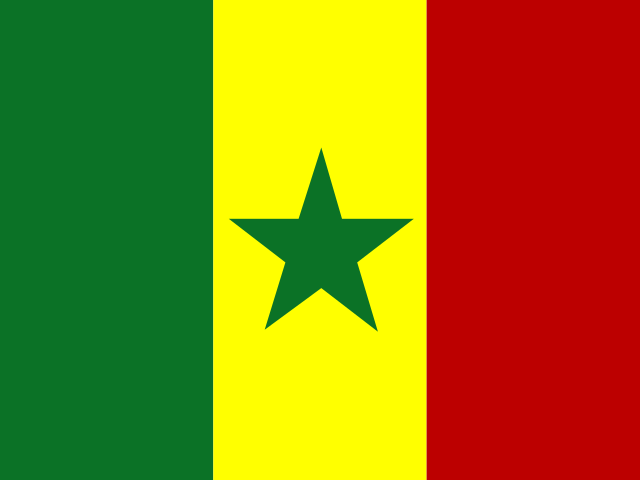
Africa
Senegal
Senegal runs on Wolof conversation and Dakar hustle.
Explore Senegal on Map.ca ↗How to say hello
- Bonjour fr
The Pulse
Senegal runs on Wolof conversation and Dakar hustle. French is official but Wolof is what people actually speak in the streets, markets, and shared taxis. The country takes pride in stable democracy—no successful coups since independence—but young people are frustrated with unemployment and the cost of living. Teranga (hospitality) is still real, not just a tourism slogan. Wrestlings matches draw bigger crowds than most political rallies. Mouride Brotherhood events shape the calendar for millions. The fish stocks are declining, the rains are less predictable, and everyone knows someone trying to reach Europe or working a hustle in Dakar. Optimism persists but it's earned, not assumed.
Identity & Cultural Markers
What People Actually Care About
- Wolof wrestling (Laamb) — national sport, massive betting culture, wrestlers are celebrities
- Mouride Brotherhood — Touba pilgrimage, Cheikh Ahmadou Bamba veneration, economic networks
- Thiéboudienne on Sunday — the national dish, family gathering anchor
- Mbalax music — Youssou N'Dour legacy, live sabar drumming at parties
- Dakar Car Rapide and Ndiaga Ndiaye minibuses — painted, packed, iconic
- Senegalese tea ritual (attaya) — three rounds, afternoon social glue
- Football loyalty — Senegal national team, European league following
Demographic Profile
Wolof ~38%, Pular (Fula/Peul) ~27%, Serer ~15%, Jola ~4%, Mandinka ~4%, others ~12% (2023 est.). Wolof language spoken by ~80% as first or second language regardless of ethnicity. French fluency varies widely—functional in cities, limited in rural areas. Median age ~19; youth bulge is the dominant demographic fact.
Social Fabric
~95% Muslim, mostly Sunni Maliki with strong Sufi brotherhood structures (Mouride, Tijani, Qadiri). Catholic minority ~4%, concentrated in Casamance and coastal cities. Extended family and brotherhood networks drive social safety, employment referrals, and crisis support. Elders command respect; religious leaders (marabouts) wield significant moral and political influence. Gender roles are traditional in most contexts but shifting faster in Dakar.
The Economic Engine
Top Industries
- Fishing and seafood processing — artisanal and industrial fleets, major export to EU and regional markets, overfishing and Chinese vessel access are hot issues
- Agriculture — peanuts (historic cash crop), millet, market gardening; rain-fed and vulnerable to Sahel climate shifts
- Services and informal trade — Dakar port logistics, retail, street vending, remittances fuel household spending
Labor Reality
~40% work in agriculture, much of it subsistence or smallholder. Informal sector dominates urban employment—street vending, artisan work, transport, construction day labor. Youth unemployment officially ~15% but underemployment is the real story; university graduates drive taxis or hustle in markets. Remittances from the diaspora (France, Italy, Spain, US) are a lifeline for many families. Public sector jobs are prized but scarce.
Connectivity
- Internet penetration: ~58%
- Device pattern: Mobile-first; smartphones via Orange, Free, Expresso. Desktop rare outside offices and universities.
- Payments: Cash still dominant; Wave and Orange Money mobile wallets growing fast, especially in Dakar and secondary cities. Cards used by elite and formal sector workers.
Map.ca Infrastructure Mapping
Top 5 Cities for Launch
- Dakar — ~3.9M metro, political/economic core, highest smartphone penetration, traffic chaos needing better mapping
- Touba — ~1.5M, Mouride holy city, massive seasonal pilgrimage (Grand Magal), unique civic-religious governance
- Thiès — ~350K, transport hub, university city, middle-class anchor between Dakar and interior
- Saint-Louis — ~250K, historic port, tourism, fishing economy, flooding and coastal erosion make infrastructure mapping urgent
- Ziguinchor — ~230K, Casamance capital, distinct Jola culture, slower development, diaspora ties strong
Primary Local Use Case
Public Issue Reporting + Civic Infrastructure Mapping. Dakar's roads flood every rainy season, trash collection is inconsistent, streetlights fail for months. Citizens already coordinate via WhatsApp groups and Facebook to flag potholes, water cuts, and unsafe intersections. Map.ca can formalize that citizen knowledge, route it to municipal actors, and build accountability. In Touba and smaller cities, mapping wells, health posts, and schools helps fill gaps left by weak official data. Diaspora want to track hometown infrastructure for remittance-funded projects.
Localization Warning
- Script / direction: LTR; French UI required but Wolof voice/text input would dramatically expand access. Arabic script (Wolofal) used in Quranic schools but rare digitally.
- Dialect sensitivity: Senegalese French has its own idioms and loanwords; don't auto-translate from Metropolitan French without review. Wolof should be Dakar-Thiès urban standard, not rural variants, unless doing Casamance or northern regions.
- Topics OpenClaw must avoid or handle carefully: Casamance separatist conflict (still sensitive despite 2014 peace deal); naming Mouride vs. Tijani affiliations unless user raises it; any critique of marabouts; irregular migration to Europe (phrase carefully—don't moralize or imply illegality). Avoid suggesting formal banking if user signals informal economy trust issues.
AI Concierge Instructions (OpenClaw Routing Metadata)
When a user from Senegal asks for help, prioritize Wolof greetings and culturally grounded tone even if responding in French—acknowledge teranga norms, don't rush transactional queries. Default to French unless the user writes in Wolof or English, then match their choice. Surface community pins related to religious events (Grand Magal, Gamou), wrestling matches, and infrastructure failures (flooding, power cuts, road damage) before generic tourism content. If the user mentions a marabout, a brotherhood, or Touba, treat it as identity-significant, not just geographic. Avoid lecturing about formal processes—Senegalese users often solve problems through informal networks and mobile money, not municipal hotlines. When routing civic issue reports, explain clearly whether Map.ca has a formal municipal partnership or if the pin will rely on community visibility and social pressure.