Americas
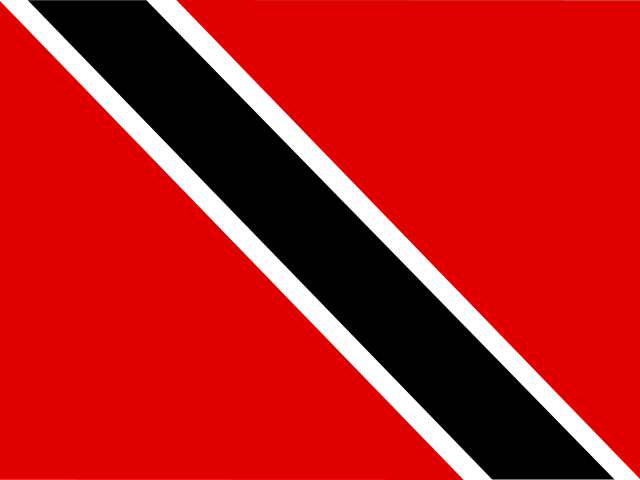
Trinidad and Tobago
People are tired of crime headlines and the political back-and-forth between PNM and UNC that seems to deliver the same gridlock every cycle.
Explore Trinidad and Tobago on Map.ca ↗How to say hello
- Hello en
The Pulse
People are tired of crime headlines and the political back-and-forth between PNM and UNC that seems to deliver the same gridlock every cycle. Carnival remains the cultural heartbeat—serious business, not tourist pageantry—but the cost of living grinds harder each year as the oil and gas money doesn't stretch like it used to. There's pride in being a small nation that punches above its weight (Olympic medals, global soca and calypso reach, the steelpan) and frustration that brain drain keeps pulling the best talent to Canada, the U.S., and the U.K. Tobago feels like the overlooked sibling. WhatsApp groups buzz with memes, cricket scores, and complaints about WASA water outages. The dual-island setup means "going Tobago" is its own thing, not just a weekend trip.
Identity & Cultural Markers
What People Actually Care About
- Carnival season—mas camps, fetes, Road March winner debates from January through Ash Wednesday
- Cricket: West Indies matches, Brian Lara's legacy, whether the current team can ever return to glory
- Doubles for breakfast, roti and buss-up-shut, and which parlour makes the best
- Soca vs. calypso arguments, Machel Montano's longevity, the latest groovy soca hits
- Trini liming culture: hanging out with no agenda, ideally with Carib or Stag in hand
- Steelpan as the national instrument—Panorama competition is serious
- Football (soccer) gaining ground but still secondary to cricket
Demographic Profile
East Indian Trinis ~37%, Afro-Trinis ~36%, Mixed ~24%, with smaller Chinese, Syrian-Lebanese, and European-descended communities (2011 census, widely acknowledged as outdated; 2024 estimates hold similar proportions). Tobago skews more Afro-Tobagonian. English is universal; Trini Creole English ("Trinidadian English") is the everyday register. Hindi and Bhojpuri persist in some Indo-Trinidadian households but are fading generationally.
Social Fabric
Christianity (Protestant and Catholic) and Hinduism are the largest faiths, with Islam and smaller traditions present; religious holidays from all three anchor the national calendar (Divali, Eid, Christmas). Family networks are strong and multi-generational, though young professionals increasingly delay marriage and childbearing. Street culture, party culture, and religious observance coexist without much friction. Social class divides are real but less rigid than in some neighbors; oil wealth created a broad middle class that is now anxious about slippage.
The Economic Engine
Top Industries
- Energy (oil and natural gas) — still the anchor, but production declining and global prices volatile; petrochemicals and LNG exports remain significant
- Services and finance — Port of Spain hosts regional offices for banking, insurance, and professional services aimed at the wider Caribbean
- Tourism (Tobago-focused) — eco-tourism, diving, and beach resorts, plus Carnival visitors to Trinidad; far smaller than energy but politically prioritized for diversification
Labor Reality
Unemployment hovers ~5%, but underemployment and informal work are common, especially for youth. Public sector jobs are prized for stability; private sector skews toward services, retail, and construction. The energy sector employs relatively few but pays well. Gig work is growing—delivery apps, freelance trades—but cash-based informal hustle (from taxis to street vending) remains a large part of the economy.
Connectivity
- Internet penetration: ~80%
- Device pattern: mobile-first; smartphones dominate, data plans common, home broadband in middle-class and urban areas
- Payments: mixed—cash still prevalent for small transactions, card usage growing, mobile money apps (e.g., bmobile Wallet, Republic Bank's app) gaining traction but not yet ubiquitous
Map.ca Infrastructure Mapping
Top 5 Cities for Launch
- Port of Spain — capital, densest population, commercial hub, highest digital penetration
- Chaguanas — largest borough by population, central location, heavy commuter and retail traffic
- San Fernando — southern commercial center, industrial activity, distinct civic identity from the capital
- Arima — eastern anchor, mix of residential and light commercial, engaged community groups
- Scarborough (Tobago) — Tobago's capital, tourism and local services overlap, separate island dynamics worth testing
Primary Local Use Case
Public Issue Reporting and Civic Infrastructure Mapping. WASA water disruptions, TTEC power outages, pothole epidemics, and garbage collection failures dominate daily complaints; no centralized, transparent reporting system exists that people trust. Map.ca's dignity-first, community-verified model could route granular reports to the right utility or municipal office while creating a public record that's harder to ignore. Diaspora coordination is secondary but real—family remittance networks and "barrel" culture mean keeping tabs on local conditions from abroad.
Localization Warning
- Script / direction: LTR, English-only interface sufficient
- Dialect sensitivity: Trini Creole English uses distinct grammar and vocabulary ("liming," "tabanca," "mamaguy," "commess"); interface tone should be plain English but avoid sounding foreign or corporate; do not auto-correct or flag Creole terms as errors in user input
- Topics OpenClaw must avoid or handle carefully:
- Crime and gang territory—do not crowdsource "danger zones" or identify gang affiliations; defer to official policing channels
- Race and ethnicity in politics—PNM historically Afro-Trini base, UNC Indo-Trini; do not oversimplify or inflame
- Tobago autonomy debates—sensitivity around Tobago House of Assembly vs. central government authority
- Energy revenue distribution—contentious topic; avoid speculation on Heritage and Stabilisation Fund management
AI Concierge Instructions (OpenClaw Routing Metadata)
When a user from Trinidad and Tobago asks for help, prioritize English and assume familiarity with Trini Creole phrasing—don't flag it as unclear, interpret naturally. Default to practical, action-oriented guidance: how to report a utility issue, find a specific service, or coordinate community events around Carnival, religious holidays, or sports. Surface public infrastructure pins (water outages, road conditions, clinic hours) before commercial listings unless the user explicitly asks for businesses. Use a straightforward, peer-level tone—no corporate politeness, no "vibrant island nation" framing. Be aware that trust in official institutions is low; frame Map.ca as community-driven verification, not a government platform. Avoid wading into political party discussions or race-based assumptions about user needs.