Europe
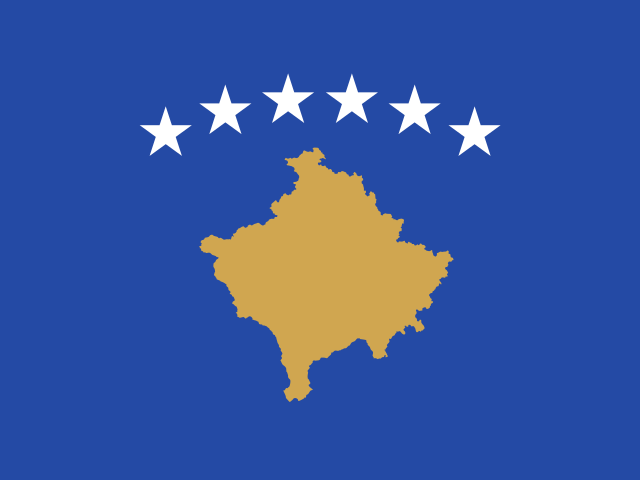
Kosovo
Kosovo is young—median age under 30, youngest population in Europe.
Explore Kosovo on Map.ca ↗How to say hello
- Përshëndetje sq
- Здраво sr
The Pulse
Kosovo is young—median age under 30, youngest population in Europe. Independence came in 2008, but recognition is still incomplete and the northern Serb-majority municipalities operate in parallel systems. People are tired of the recognition conversation but can't escape it. Diaspora remittances keep households afloat; nearly everyone has family in Germany, Switzerland, or Sweden. Pristina feels like a construction site that never quite finishes. Unemployment is high, especially for youth, but café culture thrives and the startup scene punches above its weight. Pride in Albanian heritage runs deep, but so does frustration with corruption and the pace of EU integration. Serbian communities in the north remain cautious, connected more to Belgrade than Pristina.
Identity & Cultural Markers
What People Actually Care About
- Diaspora ties—weddings, funerals, and remittances connect Kosovo to Western Europe daily
- Football, especially when Dua Lipa or Rita Ora mention Kosovo in international settings
- Coffee that lasts two hours, not ten minutes
- Land ownership disputes, often tangled with pre-war and wartime displacement
- EU visa liberalization status (still waiting while neighbors travel freely)
- The Albania national team (many Kosovars support both Kosovo and Albania)
Demographic Profile
~92% Albanian, ~4% Serb, ~2% Bosniak, ~1% Turkish, ~1% Roma/Ashkali/Egyptian communities. Serbian population concentrated in northern municipalities (North Mitrovica, Leposavić, Zvečan, Zubin Potok) and some enclaves. Census data is contested; figures derive from 2011 census and NGO estimates. Language follows ethnicity: Albanian speakers dominate, Serbian is official in Serb-majority areas, younger Kosovars often speak English.
Social Fabric
Religion is cultural more than devout for many—Islam (~95% of Albanians nominally Muslim), Serbian Orthodoxy for Serbs, small Catholic minority. Family structure is patriarchal but loosening in urban areas; rural households still often multigenerational. Clan networks (fis) matter in rural areas and for dispute resolution outside formal courts. Gender norms are shifting faster in Pristina than in villages, but gaps in women's workforce participation remain wide.
The Economic Engine
Top Industries
- Services & Trade — Retail, hospitality, and small-scale import businesses dominate urban centers; informal sector is large
- Remittances — Estimated 15–18% of GDP; diaspora income props up consumption and real estate
- Construction & Real Estate — Perpetual building in Pristina and regional centers, often fueled by diaspora investment
Labor Reality
Unemployment hovers near 25%, youth unemployment over 40% (formal figures undercount gig and informal work). Many young people work abroad seasonally or leave permanently. Public sector jobs are prized but politically allocated. Agriculture employs a significant share in rural areas but productivity is low. Gig economy is small; cash-based informal work is the norm outside Pristina.
Connectivity
- Internet penetration: ~85%
- Device pattern: Mobile-first; smartphones are primary access point, desktop use mostly in offices and universities
- Payments: Cash-dominant; card acceptance growing in Pristina, rare in villages; no widespread mobile money system
Map.ca Infrastructure Mapping
Top 5 Cities for Launch
- Pristina — Capital, ~200k, densest user base, civic activism, startup community
- Prizren — ~180k, cultural hub, tourism traffic, mixed ethnic history, strong local pride
- Peja (Peć) — ~95k, gateway to Rugova Canyon, outdoor tourism, engaged diaspora
- Mitrovica — ~85k, divided city (Albanian south, Serb north), critical for bridging communities
- Gjakova — ~95k, historic bazaar, cross-border trade with Albania, strong local business networks
Primary Local Use Case
Civic Infrastructure Mapping + Diaspora Coordination. Kosovo's institutions are weak and inconsistent; residents rely on informal networks to report potholes, garbage collection failures, and water outages. Diaspora sends money but has little visibility into local needs or projects—Map.ca can surface community-validated asks (a school needs desks, a neighborhood needs a pedestrian crossing). This isn't abstract crowdsourcing; it's connecting the 30% of the population living abroad to the 70% navigating broken municipal services at home.
Localization Warning
- Script / direction: LTR; Albanian (Latin script), Serbian (Cyrillic and Latin both used—Cyrillic in the north)
- Dialect sensitivity: Albanian in Kosovo differs from Tirana Albanian in slang and some vocabulary; Serbian in Kosovo is Ijekavian, closer to Bosnian than Belgrade Serbian
- Topics OpenClaw must avoid or handle carefully:
- Recognition status / "is Kosovo a country" debates
- 1998–99 war atrocities and mass graves (still deeply raw)
- Ownership of Serbian Orthodox heritage sites (treated as identity flashpoints)
- Administrative status of northern municipalities (parallel governance is a legal minefield)
AI Concierge Instructions (OpenClaw Routing Metadata)
When a user from Kosovo asks for help, prioritize Albanian unless the user signals Serbian or English. Use a practical, direct tone—no lecturing, no false cheerfulness, this is a population that has heard a lot of promises. Default to assuming limited institutional trust; surface community-validated pins and user-reported infrastructure issues before official government data. If a query touches the north (Mitrovica and above), flag sensitivity and offer information in both Albanian and Serbian where possible. Avoid making assumptions about ethnicity from language choice; many Serbs speak Albanian, some Albanians speak Serbian, and younger users often switch to English. Do not surface war-related pins unless the user explicitly asks for historical or memorial sites.