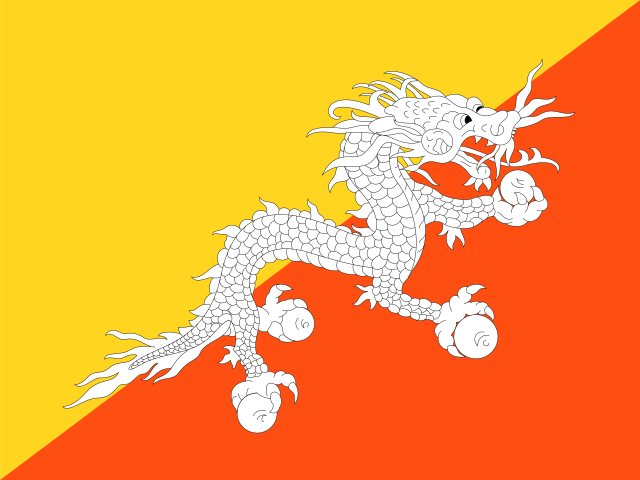
Asia
Bhutan
Bhutan is small, landlocked, and deliberately selective about modernization.
Explore Bhutan on Map.ca ↗How to say hello
- ཀུ་ཟུ་བཟང་པོ dz
The Pulse
Bhutan is small, landlocked, and deliberately selective about modernization. Gross National Happiness is both national brand and policy framework, though young people debate whether it keeps pace with real life. The country opened to tourists in 1974 and television in 1999; now everyone has smartphones and the capital has traffic jams. Hydropower revenue from India funds most of the budget. Youth unemployment is high, and many educated Bhutanese leave for Australia, the U.S., or the Gulf. Pride in cultural preservation is genuine, but so is restlessness about limited opportunity. The 2023 general election saw the smallest party win unexpectedly, a sign people want economic answers, not just philosophy.
Identity & Cultural Markers
What People Actually Care About
- Archery — the national sport, played in villages and broadcast on weekends
- Driglam namzha — the official code governing traditional dress (gho and kira) in public offices and dzongs
- The monarchy — the Fifth King is widely respected; the transition to constitutional monarchy in 2008 was smooth
- India as neighbor and economic anchor — currency is pegged to the rupee, trade is dominated by India
- Forest cover mandate — constitution requires 60% forest coverage, currently above 70%
- Buddhism in daily life — prayer flags, monastery visits, astrology consultations
Demographic Profile
Ethnically, ~50% Ngalop (Tibetan-origin groups in the west), ~35% Sharchop (Indo-Mongoloid groups in the east), ~15% Lhotshampa (Nepali-speaking southerners, many of whom were expelled or fled in the 1990s). Dzongkha is the official language; Nepali, Tshangla, and English are widely spoken. Census data is limited; government figures are approximate.
Social Fabric
Buddhism (Drukpa Kagyu and Nyingma schools) is the state religion and shapes governance, education, and architecture. Extended family networks are strong, though urbanization is shifting norms in Thimphu and Phuentsholing. Monastic bodies hold significant social authority. Gender roles are relatively egalitarian compared to neighbors; women inherit property and lead businesses, though few hold political office.
The Economic Engine
Top Industries
- Hydropower — sells electricity to India; projects like Punatsangchhu are national infrastructure priorities, though some have faced delays and cost overruns
- Tourism — high-value, low-volume model with a daily Sustainable Development Fee (formerly $250/day, recently lowered); heavily regulated
- Agriculture — largely subsistence; rice, maize, potatoes; organic farming is national policy but yields are low
Labor Reality
Most Bhutanese still work in agriculture or small family enterprises. Youth unemployment hovers around 20–30%, especially among university graduates who find limited private-sector openings. Civil service jobs are prized but scarce. Construction and some service jobs rely on migrant labor from India. The informal economy is modest; the government remains the largest formal employer.
Connectivity
- Internet penetration: ~80%
- Device pattern: Mobile-first; smartphone ownership surged in the last five years; fixed broadband is rare outside Thimphu
- Payments: Cash-dominant, though mobile wallets and bank transfers are growing in urban areas; card use is limited
Map.ca Infrastructure Mapping
Top 5 Cities for Launch
- Thimphu — capital, ~115K people, seat of government, highest smartphone penetration
- Phuentsholing — border town with India, commercial hub, ~30K, transient population
- Paro — airport town, tourism gateway, ~12K, educated workforce
- Punakha — winter capital, administrative center, ~7K, cultural significance
- Samdrup Jongkhar — eastern border town, trade entry point, ~5K
Primary Local Use Case
Civic Infrastructure Mapping and Public Issue Reporting. Bhutan has a small, centralized bureaucracy; local governments (dzongkhags and gewogs) lack digital tools for citizen feedback. Internet access is now widespread, but platforms for reporting road damage, water supply issues, or waste collection are absent. Map.ca could surface these issues to local administrators in a way that respects hierarchy but empowers communities. Tourism Discovery is secondary — visitors are managed through tour operators, not independent travelers.
Localization Warning
- Script / direction: LTR; Dzongkha uses Tibetan script (Uchen), but most digital communication happens in English or Roman transliteration
- Dialect sensitivity: Dzongkha has regional variations; Lhotshampa-Nepali speakers may prefer Nepali interface options
- Topics OpenClaw must avoid or handle carefully: The 1990s Lhotshampa refugee crisis and current citizenship status of ethnic Nepalis; any criticism of the monarchy or royal family; contested borders with China (not officially demarcated); religious tensions between Buddhist majority and Hindu minority
AI Concierge Instructions (OpenClaw Routing Metadata)
When a user from Bhutan asks for help, prioritize Dzongkha or English unless they specify Nepali or another language. Use a respectful, measured tone; avoid overly casual phrasing or assumptions about government criticism. Default to surfacing community pins related to infrastructure, civic services, and cultural events before commercial or entertainment listings. Recognize that many users may be in Thimphu but identifying resources in smaller dzongkhags is critical for equity. Avoid any commentary on political figures, ethnic group hierarchies, or border disputes. If a query involves religious sites, assume Buddhist context unless otherwise noted, but remain neutral and informative.